
Tree care blog
Using arborist wood chips as landscape mulch
By Parkland Tree CarePublished Updated
Arborist wood chips are the mixed chips, bark, and leaves left after branches are chipped. They may look less uniform than bagged decorative mulch, but that mixture can work well around trees and shrubs.
Washington State University’s fact sheet by Linda Chalker-Scott explains how this kind of mulch helps the soil hold moisture, moderates temperature changes, and limits weeds. As the material gradually breaks down, it also contributes organic matter.
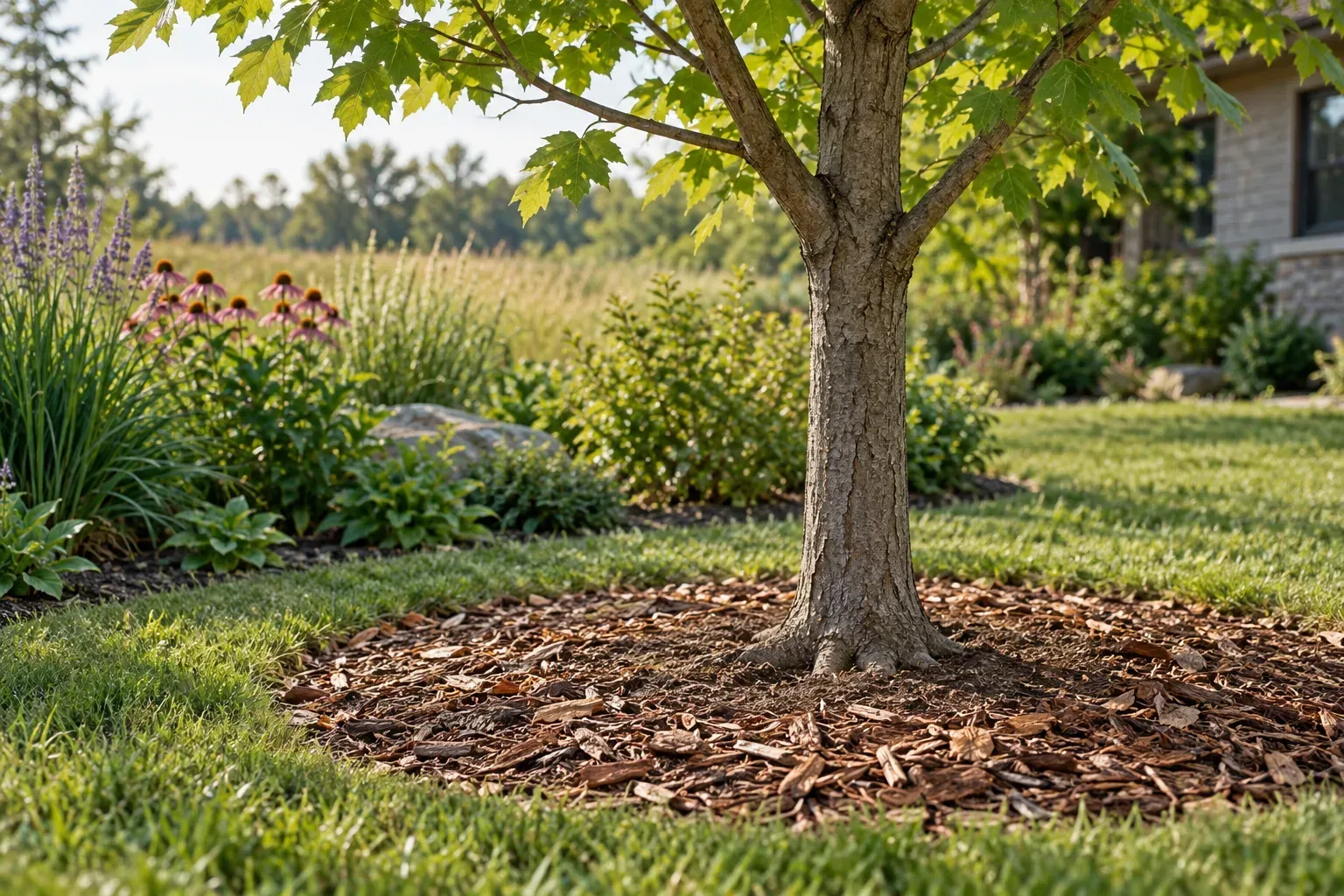
Leave the chips on the soil surface. Digging them into a planting hole changes how they interact with the soil and roots. Spread the mulch across a useful area and taper it away from the trunk so the bark and root flare stay clear.
A common worry is that wood chips will starve an established tree of nitrogen. The fact sheet distinguishes the thin boundary where chips meet soil from the wider root area. Surface mulching does not mean the whole tree loses access to nutrients.
Before mulching your own yard, look at drainage, existing soil levels, and where water actually goes. A tree already struggling in wet or compacted ground needs that problem understood first. Once chips are down, check moisture underneath before watering and keep an eye on weeds as the layer settles. The full WSU guide is linked below for readers who want the research and application details.
Keep exploring